


COMMUNIQUÉ ISSUED AT THE END OF THE VISIT AND STAKEHOLDERS’ MEETING
OF THE NATIONAL ASSOCIATION OF PROPRIETORS OF ARABIC AND ISLAMIYYA SCHOOLS (NAPAIS)
NORTH WEST ZONE
Date:
Wednesday, 24th December, 2025

Venue:
Koonooz Investment Hall, Near Rayhan Hotel, Unguwa Uku, Behind Malam Aminu Kano Teaching Hospital, Kano State.
PREAMBLE
The National Association of Proprietors of Arabic and Islamic schools (NAPAIS) is a non-governmental organisation aimed at remodelling, revamping, developing, and upgrading the standard of Arabic and Islamiyya schools in Nigeria for effective delivery with the aim of uplifting its status to the apex level so as to enable the system compete with other conventional educational system in accordance with global best practice.


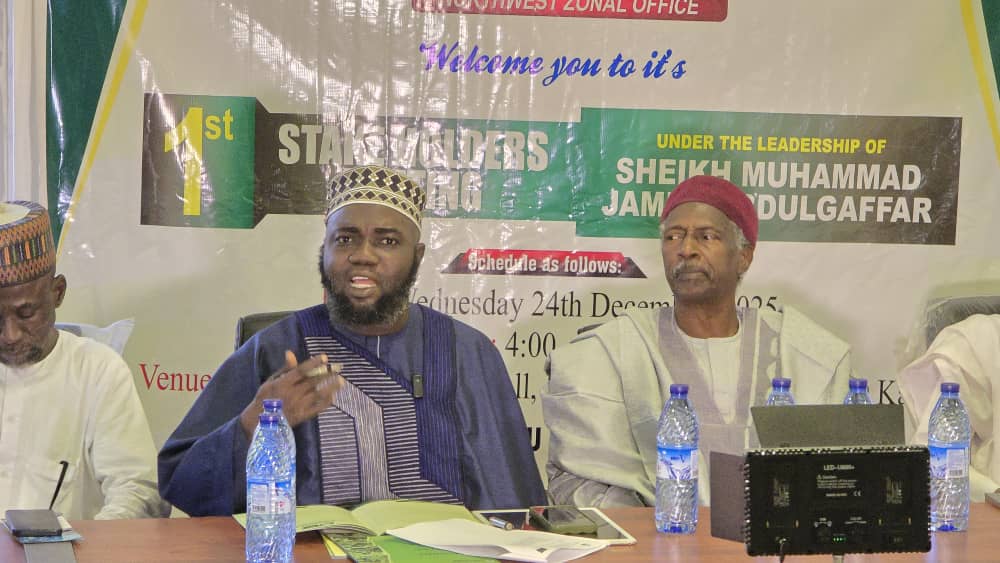
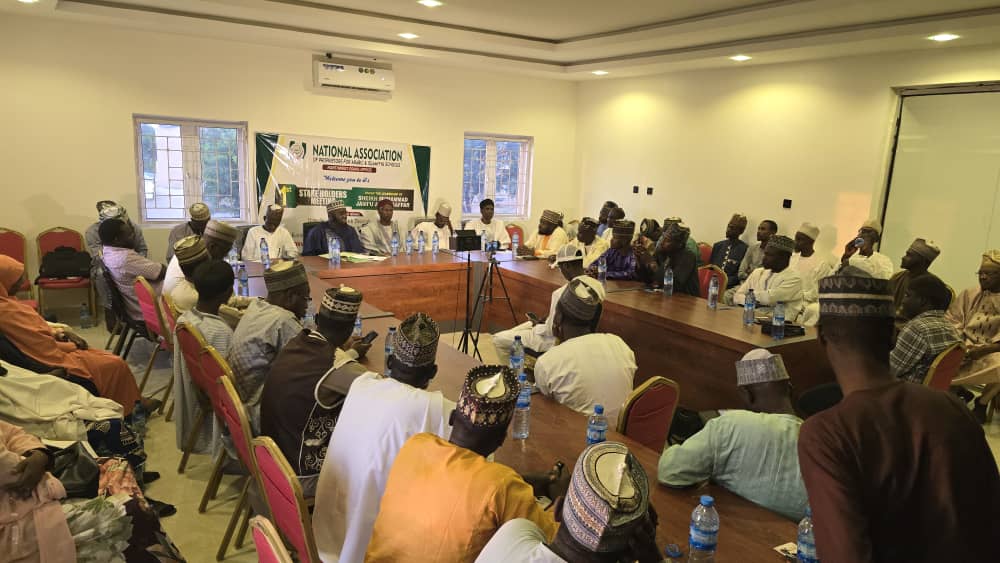
The North West Zone of NAPAIS, warmly welcomed the National President of the association, who was on a working visit & convened its 1st Stakeholders’ Meeting on Wednesday, 24th December, 2025. Places visited included; Bayero University Kano Center for Qur’anic Studies and Aminu Kano College of Islamic & Legal Studies, Kano Department of Qu’anic Studies, while the stakeholders meeting was conducted at Koonooz Investment Hall, Kano.
At the Bayero University, entourage of the NAPAIS National President was received by Professor Tijjani Rabi’u, while at AKCILS, the delegation was received by Dr. Siddiq Sani Shu’aibu on behalf of the H.O.D Gwani Ahmad Yunus Bazzi.
The 1st STAKEHOLDERS meeting was held under the leadership of the National President of NAPAIS, Sheikh Muhammad Jami’u Abdul-Gaffar, with Alhaji Imam Ahmad Zubair, mni serving as the Chairman of the occasion.
The meeting featured a Keynote Address delivered by Dr. Muhammad Abdullahi Sulaiman Fagge of Bayero University Kano, who provided critical insights into the challenges and prospects of Arabic, Islamiyya and Tsangaya education in Nigeria.
The event was graced by the Kano State Commissioner for Education, Gwani Ali Bukar Makoda, who was represented by the Director of Arabic and Islamic Education, Kano State Ministry of Education.
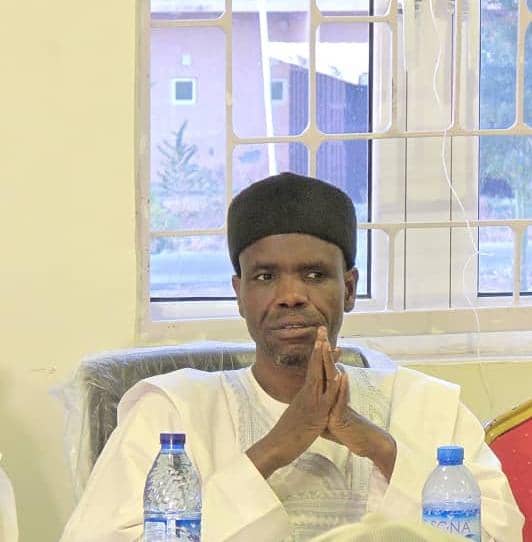
Also in attendance was His Royal Highness, Dan Lawan Kano, the District Head of Tarauni, Alh. Bello Ado Bayero who served as the Royal Father of the Day. Malam Aliyu Ibrahim Sani Mainagge, the North West Zonal Chairman of NAPAIS acted as the Chief Host and Convener.
PARTICIPANTS
The meeting attracted a broad spectrum of scholars, educationists, traditional and community leaders, and other stakeholders from within and outside Kano State, including:
The Leaders of NAPAIS – Northwest, Kano & Jigawa State Executive Members
Dr. Aminu Isma’il Sagagi – Bayero University Kano
Sheikh Nuru Adam Galadanci (Secretary General JTI – Nigeria)
Dr. Mu’azzam Sulaiman Khalid – Bayero University Kano
Barr. Sunusi Lawan Fandubu – Chairman MULAN Kano State Chapter
Dr. Nabil Bello Sa’id – Chief Executive Officer, Koonooz Investment
Barr. Abubakar Tanko – Triple Bond Attorney & Director Dayyib Academy, and Creed Academy
Capt. Adamu Bakoji (Rtd) – National Coordinator IHRC – IRF
Gwani Ahmad Bazzi – HOD Qur’anic Science, Aminu Kano College of Islamic & Legal Studies
Alhaji Abba Ibrahim Badamasi – Electoral Officer, Katsina State
Other notable participants drawn from academia, religious institutions, civil society, and the private sector also graced the event.
PROBLEMS IDENTIFIED
Having all the relevant stakeholders on ground, all hands were on deck and major problems affecting the system of Arabic and Islmaiyya schools were identified inter alia:
That almost all the Islamiyya schools, Madarasa and Tsangayas in the region were built/owned by Muslim Communities, Islamic Organisations or well meaning individuals.
Almost all the Islamic and Arabic Centres are zero fees schools for the same ideology of missionary, community service and charity.
That all the schools are excluded or neglected by the government and international community without support which has resulted in:
Lack of structures such as classrooms and offices for learning and administration in centres since years of their establishment till date.
No standard or uniform academic curriculum.
Absence of learning and instruction materials for both learning and teaching in most of the schools.
There is no management board to oversee the development of schools and welfare of students, teachers and Proprietors of the schools.
No monitoring and evaluation team to moderate and structure curricular activities and extra curricular activities.
Lack of awareness about the existence of the National policy on Almajiri education that was created for the development of the education centres.
Low awareness about National policy for non-state schools that was majorly created for their inclusiveness as Strategic Stakeholders in education.
Inadequate security structure for lives and properties of those in Islamiyya.
No state policy or structure to enable the centers secure approval or or registratiom under the state government.
There is no unified umbrella body responsible for coordinating all aforementioned kinds of schools, to speak on their behalf and implement any transformative plan or policy.
There is no government agency saddled with the responsibilities of coordinating and supervising Islamic and Arabic education in over 80% of our schools in the region.
All Arabic and Islamic schools are not recognized by the government and host communities due to their zero economic value.
There is no statutory backup or official connection between most of these aforementioned centers and National Board for Arabic and Islamic studies (NBAIS). Hence their locally created certificates can’t guarantee any student to further their education.

DELIBERATIONS
The meeting deliberated extensively on:
The current state of Qur’anic, Arabic and Islamic education in Nigeria
The challenges facing Islamiyya and Tsangaya schools
The Almajiri phenomenon and sustainable solutions
The need for stronger collaboration among government, educators and community-based organizations
MAJOR RESOLUTIONS
After thorough deliberations, the meeting unanimously resolved as follows:
- On behalf of NAPAIS, The National President sends a profound gratitudes to President Bola Ahmed Tinubu and the Host Governor of Kano state, Engr. Abba Yusuf, Minister of Education and his team members in the Federal Ministry of Education, the Executive Secretary for Almajiri and out of school children Education Commission and the Host Commissioner of Education, Kano State. For being supporters of this transformative idea in the history of Nigeria. We found it a great transformative step to allow our voices heard during the development and launching of the national policy on Almajiri and the national policy on non state schools. We sincerely thank you!
- The meeting acknowledged that Qur’anic, Arabic and Islamic education is facing serious challenges which require urgent, deliberate and collective action through effective policies, institutional reforms and stakeholder collaboration.
- The meeting emphasized the necessity of NAPAIS, which serves as platform to unite proprietors of Arabic, Islamiyya and Tsangaya schools for a coordinated development, advocacy and reform.
- The meeting called on governments at all levels – Federal, State and Local – to accord Arabic and Islamiyya schools the same level of attention, (funding support, regulation and provision of all required tools for learning and teaching.
- The meeting resolved that Tsangaya schools must be properly recognized as centers of learning and moral training, and be fully integrated into the National Education Policy as part of Nigeria’s formal education system.
- The meeting reaffirmed that the responsibility of sustaining, reforming and promoting Qur’anic and Islamic education rests primarily on stakeholders within the system themselves, noting that meaningful change can only occur when the community takes ownership of its educational institutions.
- NAPAIS will work as stakeholder with all tiers of government to provide:
Independent Board for Arabic and Islamic schools under States Ministry of Education across the country.
Standard Curriculum: The association will soon start training and implementing our embedded curriculum which aligns fully with the curriculum of Nigerian Educational Research and Development Council (NERDC) and National Board for Arabic and Islamic Studies (NBAIS). It was specially embedded for all Arabic and Islamiyya schools across the country to cater for our needs in;
Religious studies
Languages studies: which will include Arabic, English and local language of choice (Ahusa, Igbo and Yoruba languages).
Western or modern studies: this include Mathematics, Science Studies, Civic Education Studies and Commercial/Financial Studies.
Vocational Studies: This will give all our students the much cherished financial strength and vocational skills to have economic values that will definitely accord them respect in their local communities and nationwide.
Liason with MDAs: The association will liase with relevant governmental agencies/boards to domesticate the two major policies on Almajiri and non-state schools. Also, NAPAIS will come up with suitable policies that will pave the way for the system to achieve its desirable transformative development.
It will also synergize with the government and other relevant security agencies towards developing a policy to protect the lives and properties of schools and educators, most especially, our Arabic and Islamiyya Schools within territories experiencng cross border crimes such as Terrorism, Banditry and kidnapping in all parts of the country.
NAPAIS will also work through Public Private Partnership (PPP), Waqf and fundraising to provide social amenities, building classrooms and provide learning aids to the Almajiri and Islamiyya schools across the country.
f. The Association will consider providing technical and vocational skills through establishment of vocational centres in every Local Government to provide jobs opportunities, dissuade our students from begging and strengthen their economic values (for Local, State and National benefits). And that will help in solving national economic challenge.
The vocational centers will also serve as avenue for self-empowerment to our Almajiri students to curtail the notorious issues of begging among the Almajiris in Nigeria.
The Association will also remain committed to working with NBAIS to ensure coordination and authentication of certificates issued to any of our centers at all levels (Basic, Post Basic, JSS and SSS). in order for our students to have national recognition and the requisite qualifications to compete with students from conventional education. This will equally assist them in their academic pursuit to universities and other tertiary institutions .
The association will also work corporately and politely with Federal and States Ministries of Education, Universal Basic Education Commission (UBEC) and SUBEB, Almajiri Commission and others to ensure seamless disbursement and judicious utilization of funds (grants and other forms of intervention funds) for the development of Arabic, Islamic, Almajiri and Tsangayya centres from either the federal government and international donors organizations.
CONCLUSION
The visit and meeting commended the growing synergy among scholars, traditional institutions, government agencies and education stakeholders, and called for the sustenance of such engagements to ensure long-term reforms.
NAPAIS, North West Zone and National body, reaffirmed its commitment to continued dialogue, advocacy and collaboration aimed at safeguarding the dignity of Qur’anic education, strengthening Arabic and Islamiyya schools, and securing a better future for Almajiri children and the Nigerian society at large.
SIGNED:
Sheikh Muhammad Jami’u Abdul-Gaffar
National President, NAPAIS
Malam Aliyu Ibrahim Sani Mainagge
North West Zonal Chairman, NAPAIS
Chief Host & Convener
📅 Date: 24th December, 2025
📍 Kano State, Nigeria
