


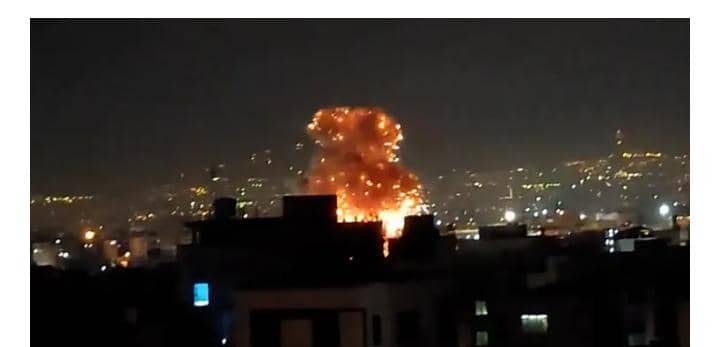
Tensions in the Middle East have intensified following reports that several oil refineries in Tehran were struck in coordinated air raids allegedly carried out by the United States and Israel.
The attacks, which targeted key energy facilities in the Iranian capital, triggered massive fires and thick smoke that could be seen rising across parts of the city.
Videos shared online captured dramatic scenes as emergency teams worked to contain the blaze at the damaged refinery sites.
The latest strikes are believed to be part of a broader campaign targeting Iranian infrastructure amid the deepening conflict involving Israel and its allies.

The U.S. president had earlier warned that more Iranian targets could face military action, stating that continued pressure was forcing Tehran to reconsider its approach toward neighbouring Gulf countries.
Amid the rising tensions, Iran’s president issued a rare apology to several Gulf nations after they were reportedly affected by Iranian retaliatory attacks.

The gesture appeared aimed at easing diplomatic strain with regional governments worried about the widening conflict.


However, incidents linked to Iranian retaliation have continued to raise concerns. Reports indicated that a drone struck the 23 Marina residential tower in Dubai, leaving smoke pouring from the high-rise and sparking fear among residents in the surrounding area.
In a separate incident near Dubai International Airport, debris from a drone that was intercepted reportedly fell on a vehicle, killing the driver.
Security analysts say such developments show the conflict is no longer limited to traditional battlefields and is increasingly threatening major cities and economic centres in the Gulf.
At the same time, fighting has intensified along Israel’s northern frontier with Lebanon. Israeli forces have expanded strikes against positions associated with Hezbollah, as part of efforts to reduce the group’s ability to launch attacks into Israeli territory.
Regional reports indicate that the clashes in Lebanon have left more than 300 people dead, with hundreds injured and thousands displaced from border communities.
In Iran, casualty figures are believed to be significantly higher as the conflict escalates.
Estimates suggest that more than 1,000 people may have died since hostilities intensified, with many civilians caught near military or strategic facilities targeted in the strikes.
Israeli Prime Minister Benjamin Netanyahu has hinted that further military operations could follow, indicating that Israel’s campaign against Iranian-linked networks in the region is far from over.
Despite growing international concern, diplomatic efforts to ease tensions have yet to produce meaningful progress. Several Gulf states have urged restraint while boosting their air defence systems amid fears of additional missile or drone attacks.
Analysts warn that the combination of direct strikes on Iranian territory, retaliatory attacks across the Gulf, and expanding clashes in Lebanon could further destabilize the region and potentially draw more countries into the conflict.
