


By Emmanuel Olagunju
Nigeria’s football administration may be heading for a major restructuring as FIFA moves to support the country’s proposed reforms following the resignation of members of the Nigeria Football Federation (NFF) board and holders of key positions.


FIFA expressed interest in the proposed reforms to the Nigeria Football Federation (NFF), with the world football governing body indicating its willingness to support the restructuring process.

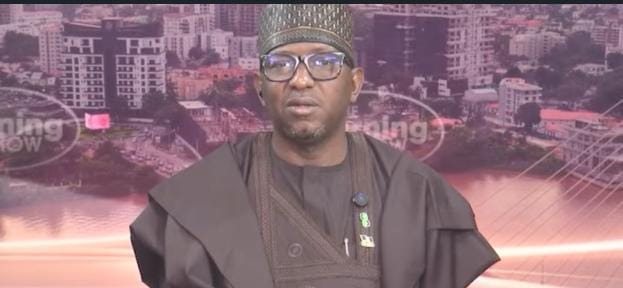
According to the Chairman of the National Sports Commission (NSC), Shehu Dikko, the development followed recent discussions involving officials of FIFA and the Confederation of African Football (CAF) in Switzerland, where the future of Nigeria’s football administration and the proposed reform process were discussed.


Speaking further during an interview on Arise television on Friday , Dikko hinted that FIFA had agreed that fundamental reforms were necessary to address longstanding challenges within Nigeria’s football administration.
Dikko said the resignation of the entire NFF board created a leadership vacuum that was not adequately covered by the federation’s existing rulebook, making it necessary for Nigerian authorities to engage FIFA on how to move forward without violating football’s governing regulations.
According to him, FIFA has endorsed the resignation and agreed to support the reform process, provided that the changes are carried out through the appropriate procedures and within the framework of the applicable rules.
“As part of the proposed transition, FIFA is expected to establish an independent normalisation committee to oversee the restructuring of Nigerian football. Dikko explained that the committee would be appointed by FIFA rather than the Nigerian government and would operate under clearly defined terms of reference and a specific timeline.
“The committee could remain in place for between six months and one year, depending on the reforms eventually agreed upon by the relevant stakeholders. Its members are expected to be independent and free from interests in future NFF elections. Those who serve on the committee would also be restricted from contesting or participating in the NFF for a specified period to preserve the neutrality of the process.”
Dikko said further that the proposed reforms would go beyond simply filling the current leadership gap, with plans to review the structure of the NFF, its electoral system and other areas of football governance.
” One proposal being considered is a team-based electoral system in which candidates for the NFF presidency would present their complete teams before an election, allowing delegates to vote for an entire leadership structure rather than individual positions.”
He said the reforms would be divided into immediate, medium-term and long-term measures, acknowledging that some of the changes could extend beyond the lifespan of the normalisation committee. An agreement involving the Nigerian government, FIFA and CAF would subsequently be put in place to ensure that whoever emerges as the next NFF leadership continues with the agreed reforms.
The NSC chairman said consultations with stakeholders had already begun, including discussions with members of the NFF Congress, stressing that FIFA delegates are expected to visit Nigeria for an on-site assessment and further engagement with stakeholders before the reform blueprint is finalised.
Dikko also addressed questions surrounding the N17 billion released by the Federal Government to the NFF, explaining that the funds were approved and transferred between December 2023 and January 2024, before the National Sports Commission was established in October 2024.
He maintained that the money had already been spent by the time the current sports commission assumed responsibility , saying that the immediate past NFF team would have to account for the funds through its audited financial records. Dikko added that government officials are embedded within the federation’s financial structure , while relevant authorities would address any issues arising from the accounts.
Dikko further called for stronger involvement from the NFF Congress, arguing that greater oversight by Congress could help identify financial and administrative problems in the system.. He recalled warning Congress members in March 2026 that the federation needed fundamental reforms and urged stakeholders to take responsibility for improving the system.
With the Federal Government providing unprecedented financial support to Nigerian football, Dikko said the scale of investment must be matched by institutional reforms capable of delivering greater transparency, accountability and efficiency.
The proposed restructuring represents more than a temporary response to the NFF leadership crisis. It could become a significant attempt to redesign how Nigerian football is governed, how its elections are conducted and how its finances and institutions are held accountable.
