


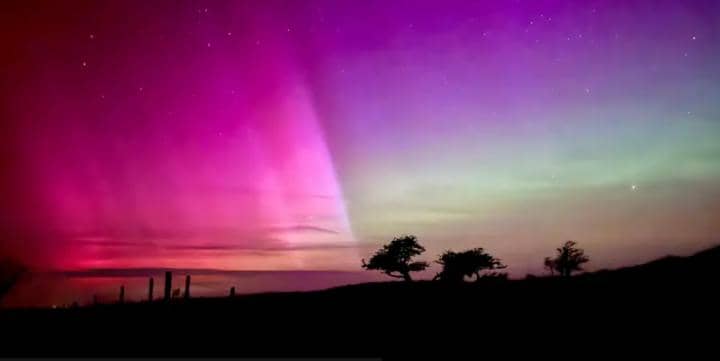
The Northern Lights are often admired as one of nature’s most beautiful spectacles, but the same solar activity that creates them can also produce powerful storms capable of disrupting life on Earth. These storms occur when the Sun ejects charged particles into space, and although such events are rare, they can interfere with electricity grids, satellites, aviation systems and communication networks.
A recent incident highlighted these dangers. In October, a JetBlue Airbus A320 flying from Cancun to Newark suddenly dropped in altitude, injuring several passengers. Investigations by Airbus revealed that intense solar radiation had corrupted data in one of the aircraft’s critical control computers, causing an unexpected pitch-down. This discovery led to the grounding of more than 6,000 Airbus planes worldwide until software updates were installed, a precaution prompted by the possibility of catastrophic failure in extreme cases.


Solar storms have caused significant problems in the past. The Carrington Event of 1859, the strongest recorded geomagnetic storm, generated electric currents in telegraph wires, shocking operators and sparking equipment. Although this happened long before the digital age, experts warn that a similar event today would be far more disruptive. Satellites are particularly vulnerable: strong solar activity can cause the Earth’s atmosphere to expand, increasing drag and potentially pulling satellites out of orbit. In 2022, a solar storm was responsible for the loss of 38 satellites. GPS systems can also be knocked offline for days, causing navigation chaos for drivers, aircraft and ships.

The impact extends to power infrastructure as well. In 1989, a solar storm triggered a major blackout across Quebec, leaving millions without electricity and heat for nine hours. With modern society heavily dependent on digital systems, such an event would have even wider consequences today.


Scientists believe that even stronger storms than the Carrington Event are possible. Evidence from tree rings suggests that enormous “Miyake events,” which could be up to ten times more powerful, have occurred in the past. The most recent one happened roughly a thousand years ago, leading researchers to warn that it may only be a matter of time before another such event affects Earth.
Credit :BBC
