


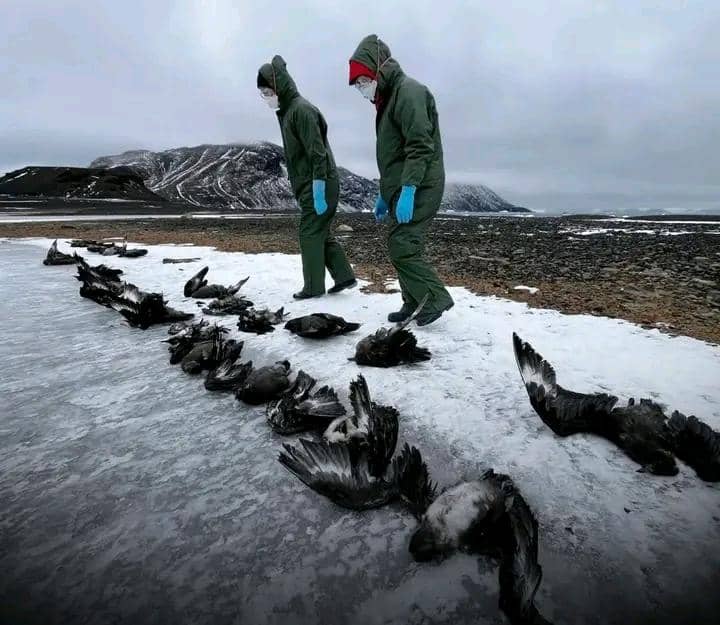
Antarctica has recorded its first confirmed wildlife deaths linked to the world’s most lethal strain of avian influenza, marking a historic and troubling moment for global conservation efforts.
Researchers have confirmed that more than 50 skuas large, predatory seabirds died after contracting the H5N1 virus across parts of the South Shetland Islands and the Antarctic Peninsula.
The findings confirm that the virus has now breached Antarctica, the last continent previously untouched by the ongoing global bird flu panzootic.


According to scientists, the infected skuas displayed severe neurological symptoms consistent with H5N1 infection, including loss of coordination, uncontrolled circling, and sudden collapse during flight. Post-mortem examinations showed the virus had attacked the birds’ brains, leading to rapid death.
This represents the first documented large-scale wildlife die-off from avian influenza on the continent.
Skuas are considered particularly at risk because of their scavenging behavior, which increases contact with infected carcasses.
Researchers warn that the true scale of the outbreak may be underestimated, as comprehensive population surveys for Antarctic seabirds are outdated or incomplete.
The spread of H5N1 to Antarctica adds to mounting pressure on an ecosystem already stressed by rising temperatures, expanding tourism activity, and pollution.
Globally, the virus has devastated poultry industries, killed millions of wild birds, and spilled over into mammals such as sea lions, foxes, and bears. Human infections, while rare, continue to carry a high fatality rate.
Scientists describe the virus’s arrival in Antarctica as a critical turning point, raising concerns about its potential impact on penguins, seals, and other species that form the backbone of the continent’s fragile food web.
The study documenting the outbreak was published in Scientific Reports, with researchers calling for urgent international coordination to improve wildlife surveillance and biosecurity measures in polar regions.
As the world’s final ecological stronghold confronts a virus already reshaping ecosystems elsewhere, experts warn that Antarctica’s loss of isolation could have long-lasting consequences for global biodiversity.
Credit: New York times
