


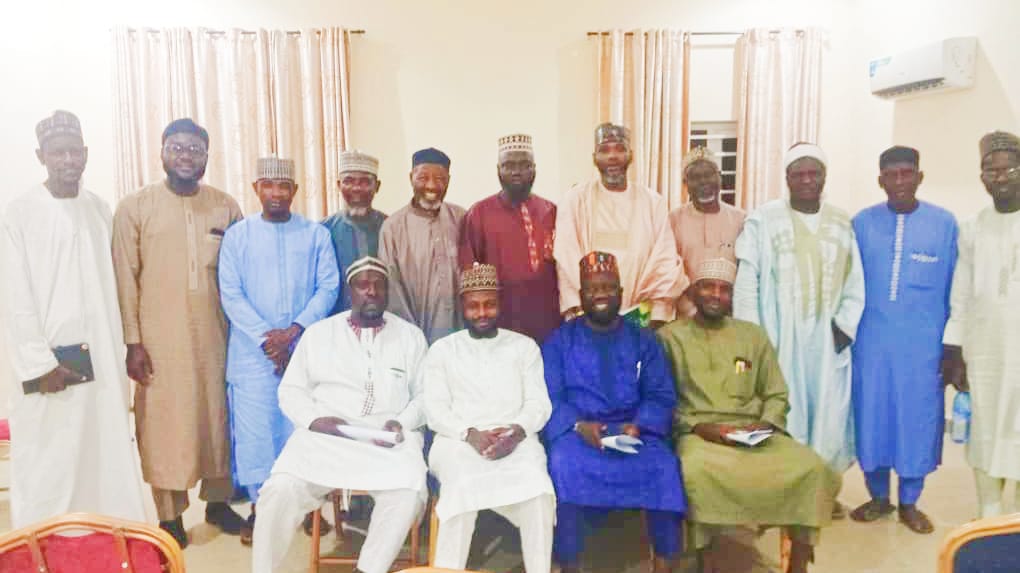
COMMUNIQUE ISSUED AT THE END OF THE NORTH EAST ZONAL STAKEHOLDERS` MEETING OF THE NATIONAL ASSOCIATION OF PROPRIETOR OF ARABIC AND ISLAMIYYA SCHOOLS (NAPAIS) HELD ON SUNDAY DECEMBER, 21ST, 2025 AT COMMAND GUEST INN BAUCHI.
PREAMBLE :The National Association of Proprietors of Arabic and Islamic Schools (NAPAIS), is a non-governmental organisation aimed at remodelling, revamping, developing, and upgrading the standard of Arabic and Islamiyya schools in Nigeria for effective delivery of sound religious knowledge.
NAPAIS is also founded to uplift the status of the schools to the highest possible level to enable the system competes favourably with the other conventional education system in accordance with global best practices.
The meeting brought together National Executives, North East Zonal Stakeholders, Zonal and State Chairmen, Proprietors, leaders of Islamic religious organisations, educational administrators and other relevant stakeholders from across the North East geopolitical zone to address pressing issues bedevilling Islamic and Arabic Education in Nigeria.

PROBLEMS IDENTIFIED Having all the relevant stakeholders on ground, all hands were on deck and all the major problems affecting the smooth running of Arabic and Islmaiyya schools were identified inter alia:
i. That almost all the Islamiyya schools, Madarasa and Tsangayas in the region were built/owned by either Muslim Communities, Islamic Organisations or Individuals.

ii. Almost all aforementioned centers are zero fees schools for the common ideology of missionary, Community service and charity.

iii. All the Arabic and Islamic schools are excluded or neglected by government at all levels and international community without any support which has resulted in:
a. Lack of structures for conducive teaching and learning at the centres since many years of their establishment.
b. Lack of standard or unified academic curriculum.
c. No learning material and instruction materials for both learning and teaching in most schools.
d. No management board to oversee the development of schools and welfare of students, teachers and Proprietors of the schools.
e. Absence of monitoring and evaluation team to moderate and structure curricular activities and non curricular activities.
f. Lack of awareness about the National policy on Almajiri education that was majorly created for the development of these centres.No awareness on National policy for non-state schools that was majorly created for their inclusiveness as strategic stakeholders in education.
g. Inadequate security to protect lives and properties of students and teachers in Islamiyya.
h. No state policy or structure to enable the centers secure approval or register under the state government.
i. There is no unified umbrella body responsible for coordinating all aforementioned schools.
j. Such a body when established will be the mouthpiece and implement any reformative plan or policy.
k. Till date, there is no any independent government agency saddled with the responsibilities of coordinating and supervising Islamic and Arabic education in over 80% of states in the region.
l. All Arabic and Islamic schools are not recognized as educational institutions by the government and the host community due to their zero economic value to the state or host communities.
m. There is no statutory backup or official connection between most of the centers and National Board for Arabic and Islamic Studies (NBAIS). Hence, certificates issued by these schools are still not enough educational qualification that could guarantee students the opportunity to further in their educational pursuit.
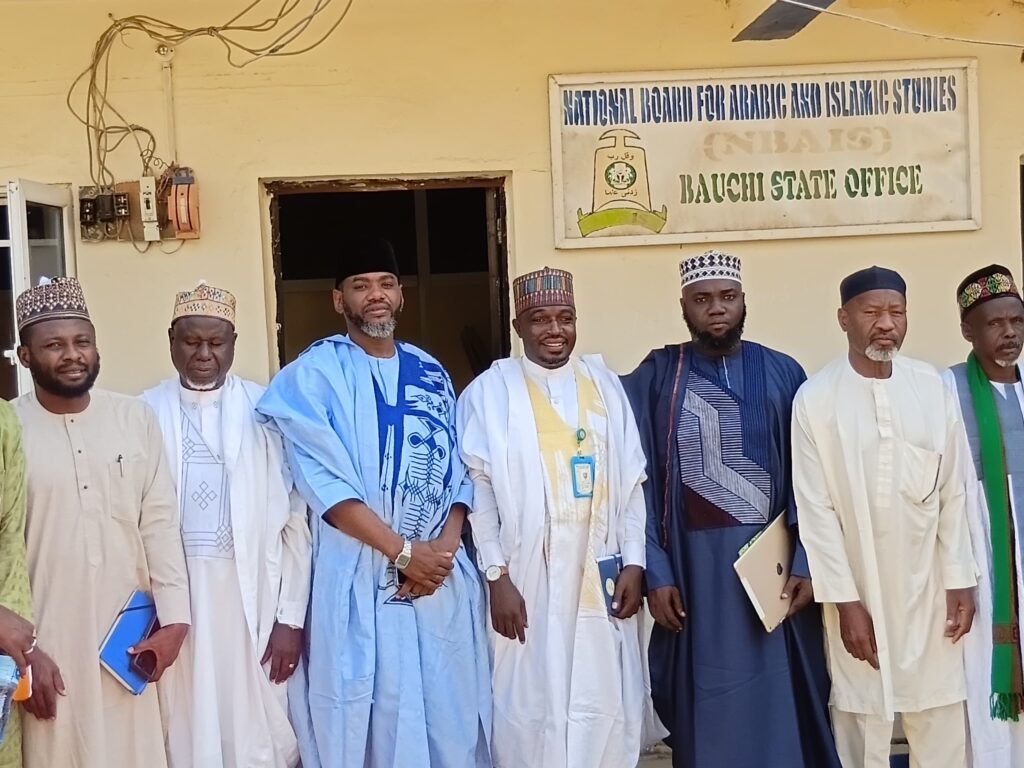
MAJOR RESOLUTIONS REACHED
After extensive deliberations, the meeting resolved among others to proffer the following workable solutions to the identified problems:
- On behalf of NAPAIS, The National President sends profound gratitude to President Bola Ahmed Tinubu and the host Governor of Bauchi state, Senator Bala Muhammed, Minister of Education and his team members in the Federal Ministry of Education, the Executive Secretary for Almajiri and out of school children Education Commission and the host Commissioner of Education, Bauchi State. For being supporters of this transformative idea in the history of Nigeria, the association appreciates the rare privilege of being part of the transformative step to let our voices be heard during the development and launching of the national policy on Almajiri and the national policy on non state schools. We thank you!
- All stakeholders have agreed that the National Association of Propriotors of Arabic and Islamic Schools (NAPAIS) should stand as an umbrella body for Arabic, Islamiyya, Almajiri, Madarasa, Tsangaya, Higher Islam and Integrated Islamic Schools in Nigeria.
- NAPAIS will work together as stakeholder with all tiers of government to provide:
i. Independent Board for Arabic and Islamic schools under States Ministries of education across the country.
ii. Standard Curriculum: The association will soon start training and implementation of our embedded curriculum which fully in line with the curriculum of the Nigerian Educational Research and Development Council (NERDC) and National Board for Arabic and Islamic Studies (NBAIS). It was specially embedded for all Arabic and Islamiyya schools across the country to cater for our needs on; Religious studies, Languages studies: which will include Arabic, English and native language of choice (Hausa, Igbo and Yoruba languages).
iii. Western or modern studies: This includes Mathematics, Science Studies, Civic Education Studies and Commercial/Financial Studies.
iv. Vocational Studies: This course will equip our students with employable and vocational skills to gain economic values, thereby improving their status and earning them respect in the society.Liason with MDAs:
v. The association will liaise with relevant government agencies/boards to domesticate the two major policies on Almajiri and non-state schools.
vi. Also, NAPAIS will come up with suitable policies that will pave the way for the system to achieve its desirable transformative development.
vii. It will also work with the government and all other relevant security agencies in developing a policy to protect the lives and properties of schools and educators. Most especially, our Arabic and Islamiyya Schools across troubled territories in any part of the country.
viii. The association will also work through Public Private Partnership (PPP), Waqf and fundraising initiative to provide social amenities, building classrooms and provide learning aids to the Almajiri and Islamiyya schools across the country.
ix. The association will consider providing technical and vocational skills through establishment of vocational centres in every local government to provide job opportunities, provide students with a better option rather than begging and strengthen their economic values for local, state and national benefits. The initiative will equally help in solving national economic challenge. The Vocational Centres will also provide avenue for self-reliance, self-empowerment to Almajiri students,.as well as curtail the unpleasant begging practice by the Almajiris in Nigeria.
x. The association will also stand-still and work with NBAIS to ensure coordination and authentication of certificates issued to any of our centers at all levels(Basic/Ibtidahy, JSS/Hidaady and SSS/Thanawy), for our students to have national recognition and compete with students of other conventional education, thus ensuring easier academic journey to universities and other tertiary institutions.
xi. The association will also work in collaboration with the Federal and states Ministries of education, Universal Basic Education Commission (UBEC) and SUBEB, Almajiri Commission and others in bringing in the portions of all Arabic, Islamic, Almajiri and Tsangayya centres from all grants and donations that are being released either by the national government and international donors. TIMELINE:
A period of 3 years is proposed for the implementation and execution of the strategic framework.
MONITORING, REPORTING, EVALUATION AND RESTRATEGISING.
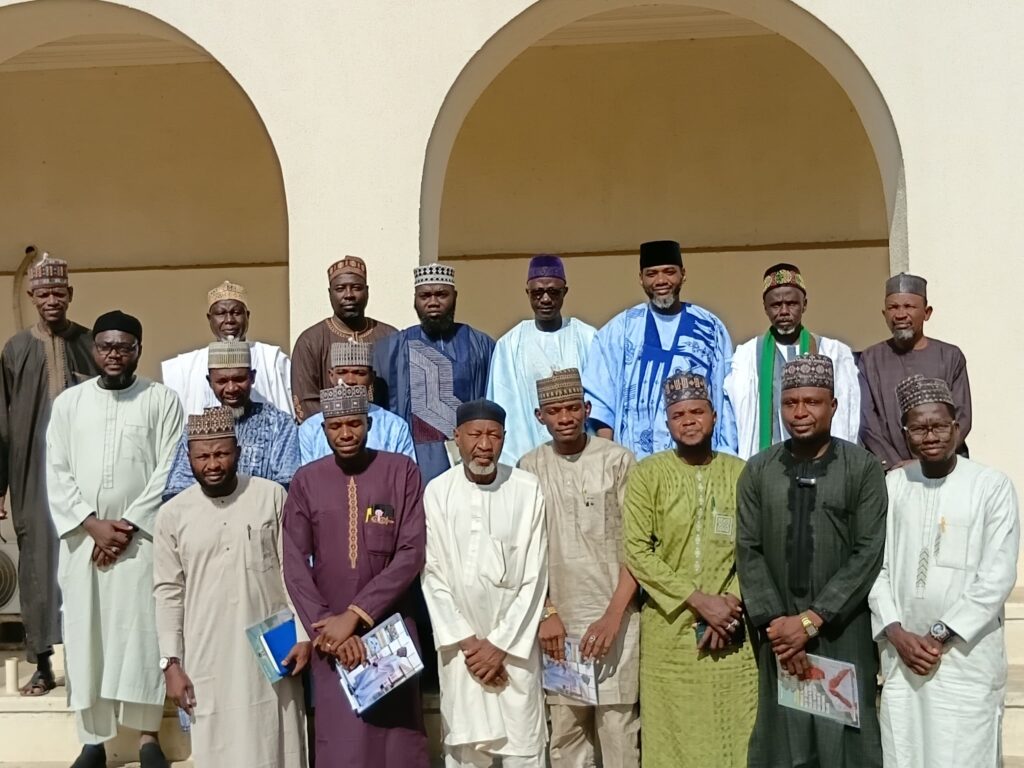
i. The national Coordinators/National Executives will be having monthly virtual and quarterly physical progressive meetings for reporting, monitoring, evaluating and RESTRATEGISING.
ii. The Zonal Executives will be having a monthly meeting on the same course, prepare progressive report for the National Executives and work in line with national instructions.
iii. The State Executives will be having their meeting a week before Zonal meeting for their report and they should also work in line with national structure and instruction through Zonal Executive body.
In attendance Sheikh Muhammad Jamiu Abdulgaffar
National President, Imam Abdurrahman Ibrahim Idris
North East Coordinator, Sheikh Mustapha Baba Ilela Representing RABIDA,
Imam Mahmud Isa Duguri,
Chief Imam Jibwis HTQS Jos.
Imam Muhammad Attahir Bakoji Chief Imam Jibwis HTQS Kaduna.
Alaramma Abubakar Ibrahim Rariya Former Chairman BASISCA Alaramma Mai Sule Zirami S.A Religious Affairs to Executive Governor, Bauchi State,
Engr. Ibrahim Musa Abdulqadir
North Central Coordinator,
Mal. Muhammad Sani Ahmad
Chairman NAPAIS Gombe State.
Mal. Abdurrahman Sani Sec. NAPAIS Gombe state,
Mal. Abdulfatah Abdurrahman Secretary BASISCA,
Mal. Umar Lawal Kabo Member BASISCA,
Mal Ibrahim Baba Karami Representing JNI,
Mal. Usman Sadiq Garba,
Chairman BACAIS,
Mal. Ismail Ilyas Chairman NAPAIS Adamawa State,
Mal. Jabir Ibrahim Idris, Chairman NAPAIS Bauchi State,
Mal Abubakar Yakubu Jahun,
Member NAPAIS Bauchi State,
Mal. Abdulhamid Ya`u, Secretary NAPAIS Adamawa State, Muhammad Maina Abdullahi Representing Chairman NAPAIS Yobe State.
Barr. Muhammad Nasir Abdullahi,
Secretary NAPAIS Bauchi State
Signed
Imam Abdurrahman Ibrahim Idris
Zonal Coordinator
Engr. Muhammad Jamiu Abdulgaffar National President
