


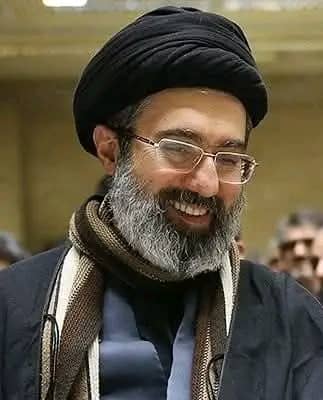
As uncertainty grows over Iran’s future leadership structure, attention is increasingly shifting toward Mojtaba Khamenei as a potential successor to his father, Ali Khamenei.
Rather than framing the development as a routine succession story, observers see it as a test of how Iran’s power system manages internal continuity.

The decision ultimately lies with the Assembly of Experts, the clerical institution constitutionally empowered to appoint the Supreme Leader. While no formal announcement has been made, international reports suggest his name carries growing weight in private deliberations.

Mojtaba has operated largely outside formal state structures, yet analysts frequently describe him as influential within elite political and security networks. He is widely believed to maintain strong ties to the Islamic Revolutionary Guard Corps (IRGC), a force that has expanded its reach far beyond defense into economic and political spheres.

His potential elevation would likely reinforce the dominance of security-aligned hardliners within Iran’s governing architecture. Some experts argue this would mean policy continuity rather than disruption particularly in areas such as regional military posture and resistance to Western pressure.
Others caution that it could intensify criticism of concentrated power within a narrow political circle.
According to reporting referenced by The New York Times, discussions remain fluid. Claims by certain opposition and foreign media outlets that a final decision has already been made remain unconfirmed by Iranian authorities.
At stake is more than a leadership change. The selection will shape Iran’s internal balance of power, its regional strategy, and the tone of its engagement with global actors.
Until the Assembly of Experts speaks publicly, the debate remains speculative but the trajectory suggests Tehran may be preparing for continuity over transformation.
