


..
As Nigerian football searches for a new direction following the resignation of Ibrahim Musa Gusau and members of his Nigeria Football Federation (NFF) executive committee on August 27, 2026, stakeholders must approach the question of future leadership with caution, objectivity and an unwavering commitment to accountability.


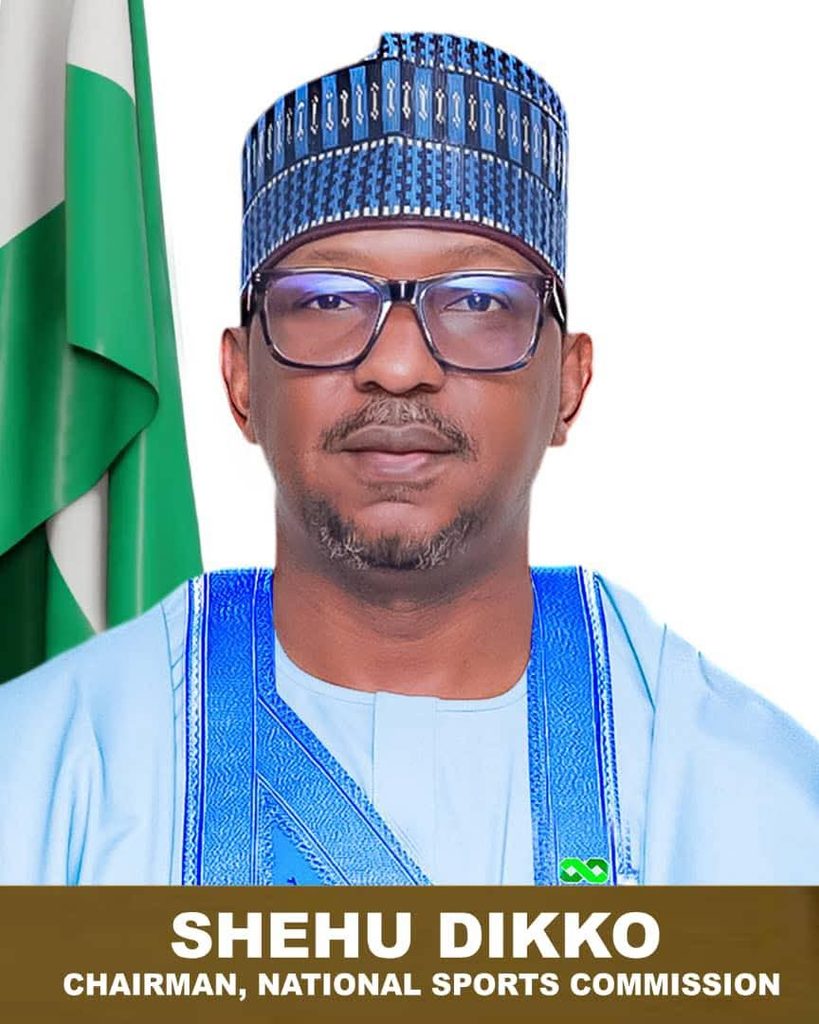
One name that has featured prominently in discussions about Nigerian football administration is Mallam Shehu Dikko, Chairman of the National Sports Commission (NSC) and a former chairman of the League Management Company (LMC), which administered the Nigeria Professional Football League (NPFL).

Dikko’s experience in football administration is not in dispute. However, experience alone should not automatically qualify anyone for the highest office in Nigerian football. Stakeholders must examine the totality of a prospective leader’s record, including achievements, unresolved concerns, administrative decisions, financial accountability and respect for institutional independence.


For these reasons, Nigerian football stakeholders should resist any attempt to make the NFF presidency a reward for proximity to government power or influence. If Dikko seeks the office, his record should be subjected to the same rigorous scrutiny expected of every other aspirant.
The Reform Question: Where Was the Urgency Before Now?
Dikko has been involved in Nigerian football administration since the early 2010s. As chairman of the LMC, he was at the centre of efforts to commercialise the domestic league, attract sponsors, improve officiating standards and strengthen the business structure of professional football.
The NFF itself acknowledged the LMC leadership’s efforts in a communiqué published in 2014, commending its initiatives to improve different aspects of the NPFL. In August 2015, the LMC also publicly discussed the need for stronger commercial partnerships and improved infrastructure.
These historical records establish that Dikko was not an outsider observing Nigerian football from a distance. He was an influential participant in its administration.
That history raises a legitimate question for stakeholders: if comprehensive reform is now considered urgent, what specific reforms were pursued during his years in league administration, which objectives were achieved, and which longstanding problems remained unresolved?
It would be inaccurate to claim that Dikko never advocated reform before 2026. Public records show that he and the LMC discussed reforms years earlier. The more pertinent question is whether those reforms delivered sustainable improvements in the areas that matter most: financial transparency, dependable sponsorship, club welfare, officiating, infrastructure and competitive standards.
On March 23, 2026, Dikko addressed the NFF Extraordinary General Assembly in Yenagoa, Bayelsa State, on the direction of football governance and reform. His intervention deserves to be assessed alongside his earlier administrative record. Stakeholders should demand a detailed account of the reforms implemented under his previous leadership, the measurable outcomes and the lessons learned.
Reform should not become a slogan that gains urgency only when the leadership of another institution is under pressure.
The circumstances surrounding Gusau’s departure from the NFF have also raised important questions about the relationship between government authorities and the country’s football governing body.
On August 21, 2026, The Guardian reported that the NSC had denied claims that the Federal Government ordered the NFF leadership to resign. The report stated that discussions were ongoing about how to address the problems confronting Nigerian football.
Six days later, on August 27, Reuters and the Associated Press reported that Gusau, NFF General Secretary Mohammed Sanusi and other executive committee members had resigned amid mounting criticism following Nigeria’s failure to qualify for major international tournaments.
These developments provide a factual basis for discussing the circumstances surrounding the leadership change.
However, the publicly reported sequence of events does not, by itself, establish that Dikko personally used government instruments to force Gusau out of office.Nevertheless, the questions deserve transparent answers.
What consultations took place between government officials and the NFF leadership before the resignations? What constitutional processes were followed? What safeguards were put in place to protect the autonomy of the NFF? Were the decisions taken in accordance with the federation’s statutes and applicable FIFA requirements?
These questions are particularly important because football administration cannot be strengthened by weakening confidence in due process.
Gusau’s departure should not be treated as proof of wrongdoing by any individual. Equally, the fact that a resignation was formally announced should not prevent stakeholders from demanding clarity about the institutional circumstances in which it occurred. If Dikko is considered for the NFF presidency, he should be prepared to explain his role in the events surrounding the transition and demonstrate how he would protect the federation from improper interference.
The issue is not personal hostility towards Dikko. It is the need to establish that the next NFF president will derive legitimacy from the federation’s recognised electoral and governance processes rather than from the influence of any government official.
Dikko’s years in charge of the LMC and his involvement in the administration of the NPFL deserve a careful and balanced assessment.
Supporters of his tenure have pointed to efforts to improve league organisation, promote commercial partnerships and strengthen the competition’s public profile. The LMC’s 2014/2015 season report, published on the NPFL website, described initiatives involving sponsors, improved communications, refereeing arrangements and collective decision-making.
Those claims form part of the historical record and should be acknowledged.
However, a credible assessment must go beyond official statements and promotional reports. It must establish what clubs, players, match officials and competition winners actually received, and whether financial commitments were met when due.
Questions have been raised in football circles about the timely payment of prize money, referees’ indemnities, sponsorship performance and outstanding financial obligations during the period of league administration associated with Dikko.
Such claims should be tested against audited accounts, payment schedules, club correspondence, referees’ association records, sponsorship contracts and independently verifiable evidence.
Without those documents, it would be irresponsible to present every allegation as an established fact.
But the need for evidence should not be used as an excuse to avoid accountability.
If prize winners were owed money, the relevant question is when the obligations arose, the amount outstanding, who was responsible for payment and when settlement occurred. If referees’ indemnities remained unpaid, stakeholders deserve to know the duration of the arrears and the steps taken to clear them.
Similarly, if sponsorship agreements failed to deliver the expected revenue, an assessment should establish whether the cause was poor commercial strategy, market conditions, contractual disputes or other factors.
A prospective NFF president should be able to explain not only the achievements recorded under his watch but also the difficulties encountered, the remedial measures taken and the lessons that would inform his future administration.
Nigerian football has suffered for too long from arguments based on personalities rather than independently verifiable performance indicators.
The question stakeholders should ask is simple: can the candidate demonstrate, through reliable records, that his administrative decisions consistently improved the financial security and professional standards of the institutions he led?
Watch out for Part 2
