


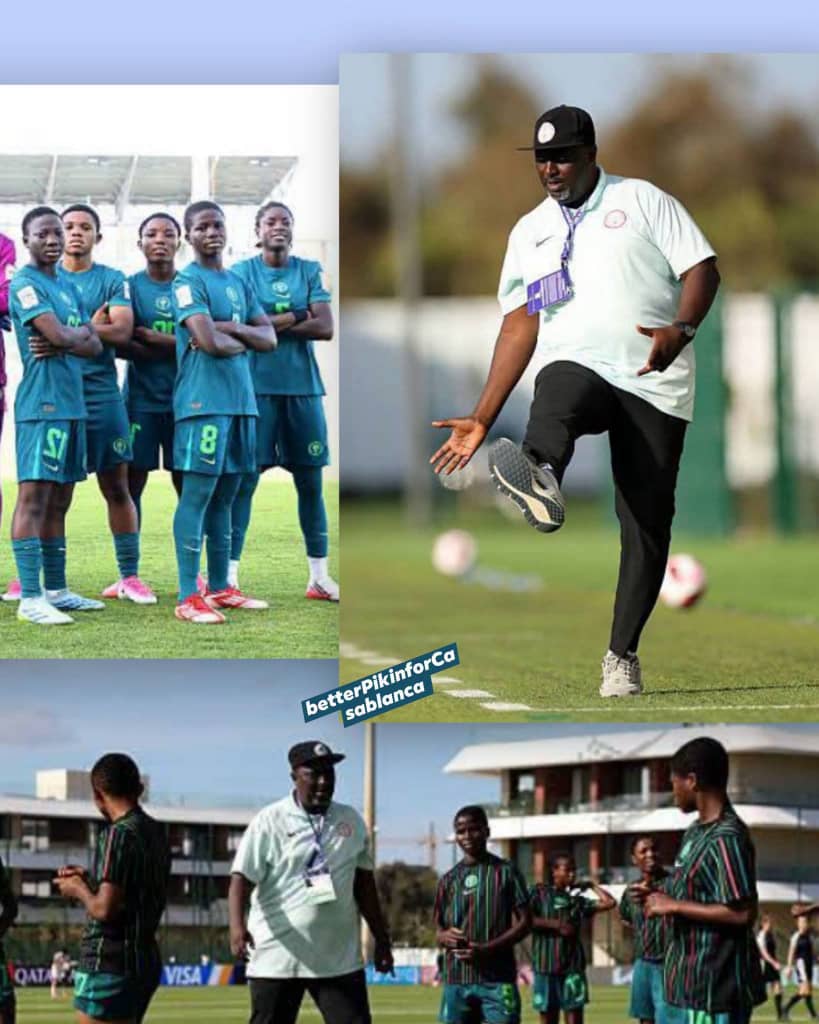
For Coach Akeem Busari, leading Nigeria’s Flamingos to the final of the 2026 FIFA U-17 Women’s World Cup in Morocco is more than a coaching achievement. It is the reward for years of patience, dedication, sacrifice and an opportunity he appears determined to maximise.
Busari’s journey in Nigerian football dates back to 2006, when he served as an assistant coach to the late Coach Yemi Tella, who subsequently guided Nigeria’s Golden Eaglets to victory at the 2007 FIFA U-17 World Cup in Seoul, South Korea, defeating Spain in the final through a penalty shootout.


Nearly two decades later, the opportunity to occupy the coveted position of a national team head coach finally arrived and Busari appears to have approached the responsibility with a clear philosophy: national interest must come before personal financial gain.

Reports surrounding his team-selection approach suggest that Busari refused to compromise his technical judgement for financial inducements allegedly offered in exchange for selecting certain players. Rather than surrendering his responsibility to vested interests, he reportedly insisted on identifying and selecting players based on merit, ability and what they could contribute to the national team.


For a coach who had waited approximately 20 years for such an opportunity, the temptation to compromise could have been enormous. But the Flamingos’ remarkable journey suggests that he understood the importance of building a team capable of competing on the global stage.
His reward is now visible.The Flamingos have made history by reaching their first-ever FIFA U-17 Women’s World Cup final after an emphatic 3-1 victory over Brazil in Wednesday’s semi-final. Queen Joseph opened the scoring before Awawu Bashiru struck twice to complete a memorable Nigerian performance.
Japan now stands between Nigeria and its first-ever title in the competition, with the final scheduled for Saturday, November 7, in Morocco.
Beyond the tactical achievements, Busari’s journey offers an important message to coaches entrusted with national assignments: coaching the national team is a responsibility to the country, not an opportunity to commercialise player selection.
There is a difference between building a national team and assembling a collection of players through financial influence. This requires competence, courage, technical judgement and patriotism; the latter undermines the dreams of talented youngsters and the future of Nigerian football.
Busari’s reported refusal to compromise player selection should therefore stimulate serious reflection among football administrators and coaches who may have allowed financial considerations to overshadow national interest.
His story also reminds aspiring coaches that opportunities may take years to arrive, but how one handles that opportunity can determine an entire legacy.
Twenty years after serving under the late Yemi Tella, Busari is now standing on the threshold of writing his own chapter in Nigerian football history.
He has taken the Flamingos to the final. Now, the ultimate opportunity awaits.
For Akeem Busari, this is no longer just about waiting for recognition. It is about turning two decades of preparation into a World Cup triumph for Nigeria.
Congratulations to the Coach Akeem Busari of Pace Setters Queens of Oyo State and Coach Kola Ige of Shooting Stars Sports Club (3SC) of Ibadan.
